
 Call: 630-268-9292


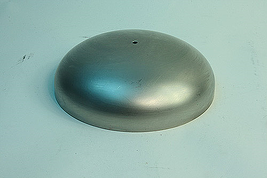 When considering the numerous options available for working with metal, many companies choose the beneficial and cost effective process hydroforming. Originally developed around 1950, hydroforming is ideal for shaping many types of ductile metals, including brass, aluminum, stainless and low alloy steels. It holds a number of benefits when compared to similar work processes, especially when considering cost, precision, and efficient operation. One area where hydroforming especially excels is its role in minimizing secondary finishing operations.
A Range of Benefits
Hydroforming is a technique that employs high pressure hydraulic fluid to press materials into a die at room temperature. It was originally developed as an alternative to stamping for small quantities of parts. Since then, hydroforming has become a major industrial practice. The process offers numerous benefits over other similar machining methods.
- Lower Costs. A number of factors contribute to the cost reduction provided by hydroforming, including the area of tooling. Processes such as stamping require a great deal of tooling. A male die and a blank holding ring are essentially the only tools that are needed in hydroforming, since a pressurized forming chamber acts as the female die. This results in an average 50% savings when compared to processes like deep draw stamping. Hydroforming also features lower cost materials and reduced set up times, with easily mounted and aligned hydroforming tools. It provides significant savings in product development. Different material types and wall thickness specifications can be accommodated while manufacturing prototypes using hydroforming techniques.
- High Quality Parts. The hydroforming process is capable of creating high quality, precision components and parts. Extremely tight tolerances are possible, including aircraft tolerances that are commonly ±0.03”. The sheet hydroforming process is also capable of producing highly complex shapes in a single operation. There is nearly no limit to the geometries that can be produced using this method, and the components produced are of consistently high quality. Hydroforming creates quality results while accommodating materials of all different types. In addition to commonly used ductile metals, hydroforming techniques can effectively shape copper and precious metals like gold. Finally, hydroforming creates materials with reduced work hardening, maintaining material tensile strength for long periods of time.
- High Efficiency. Setup and handling processes are faster and easier with hydroforming. Because of the simplified configuration of the process, tool change times are far faster than other traditional metal forming processes, often reducing change times by up to 70%. Lead times for tooling are also reduced due to simpler tooling; the multiple processes required by traditional tooling are consolidated to one machine. Parts and components that require many different operations can often be fabricated in just one cycle using hydroforming. This process is simple to run and requires a low amount of skilled labor, saving high labor expenses. Accurate results can be achieved with very low excess scrap, with the additional machining required to finish components often eliminated entirely.
Secondary Finishing Minimized or Eliminated
A great deal of time and expense can be devoted to secondary finishing operations. Traditional machining methods are apt to leave marks from matched dies and other sources. The additional labor costs can also be significant. Hydroforming creates strong, attractive, and high quality shapes that require minimal secondary finishing.
Stamping, a metalworking process using a press to shape sheets of metal, tends to leave scratches on the part. These scratches and other surface imperfections require polishing or surface refinement to repair. Hydroforming eliminates the need for these by producing smooth parts the first time around. Processes such as matched die forming also leave many residual marks on the shaped part. Shock lines, draw marks, wrinkling, and tearing may occur. Hydroforming is unique in shaping metals without these types of scuff marks.
How does hydroforming avoid the marring on finished products that occurs with so many other traditional machining processes? The answer is in hydraulic fluids that shape the metal and the soft, flexible diaphragm. Most hydroforming processes use a rubber diaphragm that acts as the common female die. The outside surfaces of the hydroformed parts do not experience metal to metal contact. This helps to virtually eliminate the scratching and scuffing that occur with conventional tools
Secondary operations to correct the flaws listed above can include a wide variety of machining processes. In addition to polishing and buffing, CNC and laser machining may be needed. Hydroforming prevents the need for these while maintaining dimensional consistency. With options that include the use of vinyl clad material to protect polished sheet stock from being marred, the cost savings that hydroforming provides can be enormous.
A Wide Variety of Industries
The smooth surface finishes produced by hydroforming are required in a number of different areas. Hydroforming is extensively used in the automotive sector and in the oil & gas industries. High tolerance applications such as aerospace and medical products also count on the smooth and accurate work that this process produces. It is used in military, commercial, and alternative energy applications as well. Commercial cookware utilizes hydroformed parts for their outstanding surface finishes, and the list goes on. High quality and cost effective, hydroforming continues to be a method of choice for metalworking. It not only eliminates the need for most secondary processing, but provides precise and efficient metal shaping. It is widely known its pleasing aesthetic qualities, and also for highly accurate finishes for industries where accuracy is of the utmost importance.